


Editor’s Note: econVue contributors share their latest thoughts on the global economy, and their perspectives on recent trends on Vuepoints. AI has been a particular focus, as its impact extends beyond technology into economics, infrastructure, and geopolitics. In this VuePoint, Saliya Weerakoon considers what the changing language surrounding AI tells us about the next phase of its development.
Artificial intelligence has not only changed the technologies we build. It also appears to be changing the language through which we describe the future.
Only a year ago, much of that language carried a sense of optimism. Public conversations revolved around capability, acceleration and possibility. Frontier models became more powerful almost every month. Capital flowed into artificial intelligence at extraordinary speed, while founders and technology companies increasingly occupied the centre of global attention.
The Age of Possibility
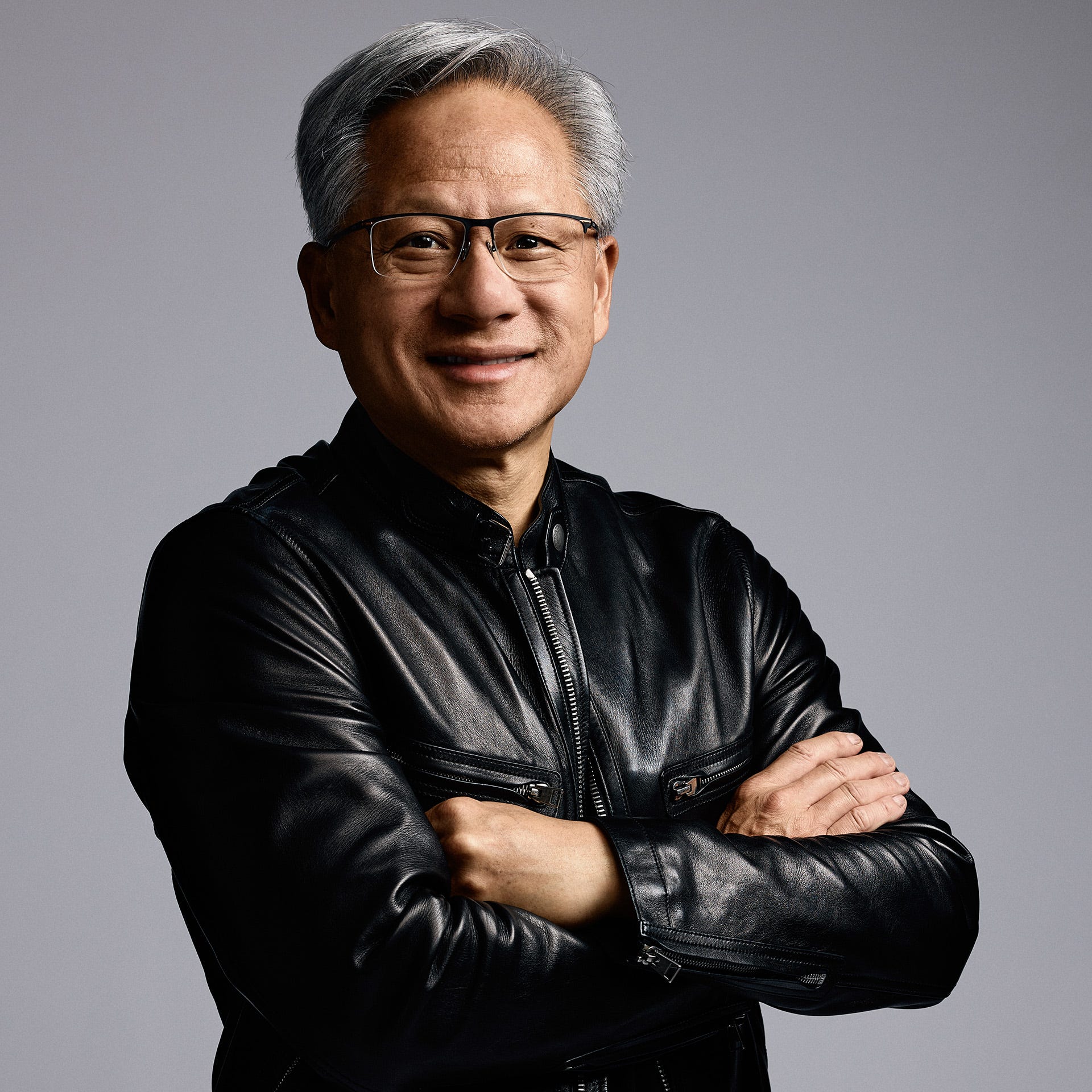
Few people embodied that moment more visibly than Jensen Huang.
Over more than three decades, Huang quietly built NVIDIA into one of the world’s most important technology companies. Then, almost unexpectedly, he became one of the defining public faces of the AI revolution. His personal journey spread rapidly across social media. His speeches moved financial markets, and millions of young people who had never heard his name before began quoting him as readily as previous generations quoted Steve Jobs or Elon Musk.
Steve Jobs narrated the age of personal computing. Elon Musk became closely associated with the age of electrification and commercial space. Jensen Huang appeared to be narrating the age of computational infrastructure.
The numbers reinforced that narrative. NVIDIA reported first-quarter fiscal 2027 revenue of US$81.6 billion, while data-centre revenue reached US$75.2 billion. The company returned US$20 billion to shareholders through dividends and share repurchases as demand for its computing infrastructure continued to expand.
Announcing those results, Huang described the construction of AI factories as “the largest infrastructure expansion in human history” and argued that agentic artificial intelligence had already moved beyond experimentation into productive economic activity. Artificial intelligence was no longer presented simply as another technology cycle. It was increasingly described as the infrastructure upon which future economies would be built.
Watching those conversations unfold, I became interested in something slightly different. My attention gradually shifted away from the announcements themselves towards the language surrounding them. The words people chose seemed to reveal as much as the technologies they described.
From late 2025 through the early months of 2026, Huang consistently spoke about AI factories, American reindustrialisation and what he repeatedly described as the country’s next Apollo moment. NVIDIA’s annual GTC conference reflected that confidence. The future appeared expansive, and the vocabulary itself carried optimism.
Enter Geopolitics
Then the tone began to change.
The shift did not appear to originate inside NVIDIA. It seemed to arrive from outside. Geopolitics entered the conversation, and the language quietly followed.
Between April and July, public appearances increasingly centred on export restrictions, supply chains, market access and the shrinking of NVIDIA’s business in China. Interviews with financial media focused less on technological possibility and more on strategic constraints. The conversation no longer revolved primarily around what artificial intelligence might build. It increasingly revolved around what geopolitical competition might prevent.
Around the same time, a different narrative emerged from Shanghai.
AI with Chinese Characteristics
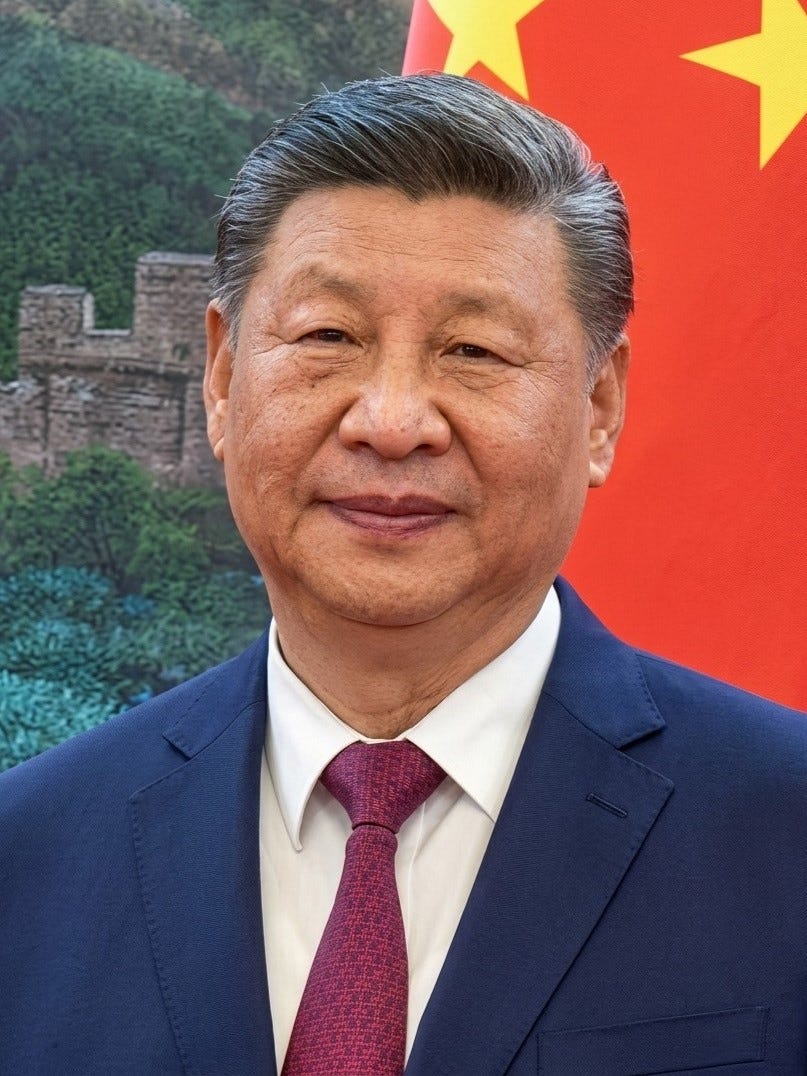
Addressing the World Artificial Intelligence Conference, President Xi Jinping presented artificial intelligence through a noticeably different vocabulary. Rather than celebrating individual founders or corporate breakthroughs, China emphasised institutions, governance and international cooperation. The proposal for a World AI Cooperation Organization, supported by twenty-nine participating countries, suggested an ambition extending beyond commercial competition towards the architecture through which artificial intelligence might eventually be governed.
The contrast was difficult to ignore. One conversation largely celebrated entrepreneurs, companies and markets. The other spoke the language of institutions, national capability and long-term coordination. Neither perspective dismissed innovation, although each appeared to begin from a different understanding of how innovation should be organised.
Huawei’s growing role within China’s technological strategy illustrates that transition. The company increasingly represents more than commercial competition. It has become part of a broader national effort to strengthen technological resilience and reduce dependence on external ecosystems. Artificial intelligence is gradually becoming less of a corporate contest and more of a question of national capability.
Beyond Chips and Models
Public discourse also appears to be entering a different phase. Only a short time ago, attention centred on who possessed the most capable model or the most powerful chip. Those questions remain important, although they no longer seem sufficient. Increasingly, the discussion is extending towards infrastructure, governance, supply chains, standards and institutional influence.
Much quieter questions, however, continue to receive comparatively little attention. Data centres require electricity, water, land and resilient transmission networks. Semiconductor supply chains depend upon political stability across multiple regions. Governance frameworks still face difficult questions of implementation, funding and international coordination. Those foundations rarely command the attention given to the release of a new frontier model, although they may ultimately shape the future of artificial intelligence more deeply.
Who Will Organise Intelligence?
The changing language surrounding artificial intelligence may therefore be revealing something larger than technological progress. It may be reflecting a transition from capability towards governance, from companies towards institutions and from commercial competition towards competing models of organising intelligence itself.
Decades from now, historians may conclude that much of our attention remained fixed on chips, benchmarks and market capitalisations while a quieter transformation unfolded beneath them. The deeper competition may never have been about semiconductors alone. It may have concerned the architecture through which intelligence itself would be organised.
The question of whether that architecture is ultimately shaped by corporations, governments or a broader international community remains uncertain. The language of artificial intelligence, however, already suggests that the conversation has entered a new chapter, and that shift may prove just as significant as the technology itself.
Saliya Weerakoon

Saliya Weerakoon is an executive, entrepreneur, columnist, and public speaker with 30 years of experience in Asia-Pacific and Middle Eastern markets. Saliya is a fellow at econVue. He lives in Colombo, Sri Lanka and…