



❝ The unhappy scenario is one in which confidence in the dollar is lost abruptly…I worry about risks to financial stability that could lead to a disorderly migration away from the dollar before adequate alternatives exist.
— Barry Eichengreen
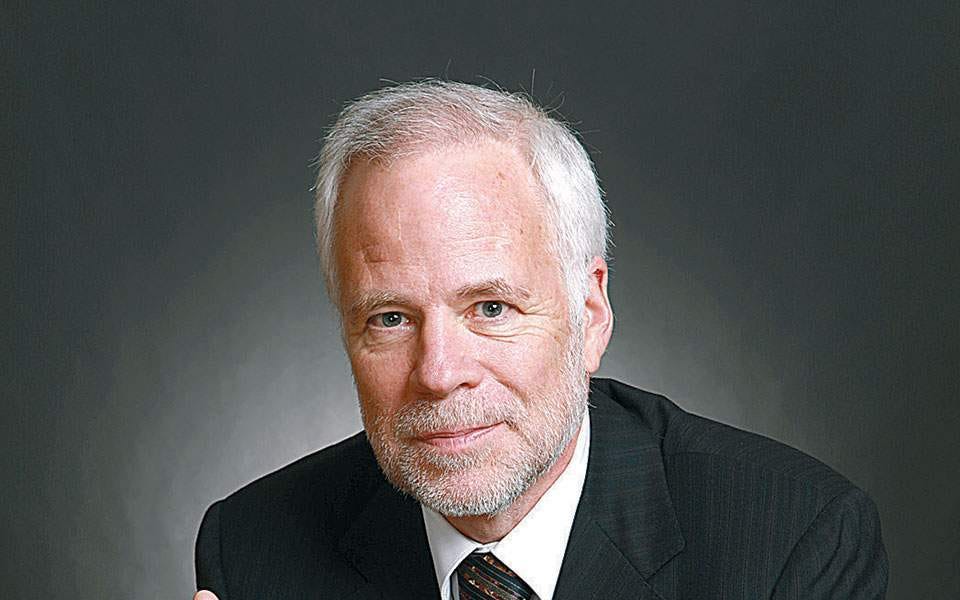
Episode Details
Guest: Barry Eichengreen
Book: Money Beyond Borders: Global Currencies from Croesus to Crypto
Host: Lyric Hughes Hale, Editor-in-Chief of econVue
Producer: Sam Fu
Recorded: Friday, May 1, 2026 | 48 minutes
Episode Overview
Barry Eichengreen joins econVue editor Lyric Hughes Hale on the The Hale Report to discuss his new book, Money Beyond Borders: Global Currencies from Croesus to Crypto. The conversation ranges from ancient coins and Spanish silver to sterling, dollar dominance, gold, stablecoins, and central bank digital currencies. His book spans centuries, from the history of money, to the state of US dollar dominance, and the future of digital money.
Eichengreen does not believe that the dollar is about to be replaced by the euro, renminbi, gold, or crypto. Instead, he warns that geopolitical fragmentation, US debt, sanctions, pressure on Federal Reserve independence, diminished faith in institutions, and new forms of market fragility could erode trust in the dollar system faster than alternatives can develop.
The result would not be a clean transition to a new reserve currency, but a more unstable monetary system, marked by increased reserve diversification, parallel payment systems, digital money, gold accumulation, and echoes of the 1930s.
About Our Guest
Barry Eichengreen is one of the world’s leading economic historians and monetary scholars. He is Distinguished Professor of Economics and Professor of Political Science at the University of California, Berkeley, where he holds the George C. Pardee and Helen N. Pardee Chair. He is also affiliated with the National Bureau of Economic Research and the Centre for Economic Policy Research, and previously served as Senior Policy Advisor at the International Monetary Fund.
He is a regular columnist for Project Syndicate and a past president of the Economic History Association. His most recent book is Money Beyond Borders: Global Currencies from Croesus to Crypto.
🎤 Topics and Key Moments
Money Beyond Borders: Money That Travels
The conversation begins with one of the book’s central ideas: currencies become international through trade before they become tools of finance, from ancient coins to Spanish silver to the US dollar.
The Life Cycle of Global Currencies
Eichengreen discusses whether reserve currencies rise and fall according to a recognizable life cycle, and whether the dollar’s century-long global role is entering a new phase.
The Dollar Under Stress
The dollar remains dominant, but Eichengreen argues that its strength depends on more than markets. It also rests on political stability, rule of law, Fed independence, and alliance trust.
❝ International currency status has economic and financial prerequisites, but it also has important political prerequisites.
Gold, Oil, and War
The conversation explores why central banks are buying gold, how sanctions are reshaping reserve management, and how Eichengreen sees events in the Middle East.
❝ I do think events in the Middle East are dollar negative and renminbi positive.
China, Silver, and Hong Kong
Eichengreen explains why the renminbi lags far behind the dollar, what China’s silver standard period reveals about global money, and why Hong Kong’s dollar peg depends on unusually specific institutional conditions.
Crypto, Stablecoins, and CBDCs
The discussion turns to Bitcoin, stablecoins, tokenized bank deposits, and central bank digital currencies, including Eichengreen’s warning that stablecoins could create new forms of Treasury-market fragility.
❝ We know from history that something that is safe and liquid today can become unsafe and illiquid tomorrow.
Monetary Fragmentation and the 1930s Scenario
The episode’s darkest warning is not that the dollar will be replaced overnight. It is that confidence in the dollar could be lost before alternatives are ready.
❝ The unhappy scenario is one in which confidence in the dollar is lost abruptly.
Policy and Practical Takeaways
To preserve the dollar’s role, Eichengreen argues that the United States must protect Federal Reserve independence, address its fiscal trajectory, maintain institutional credibility, and reassure allies.
Mentioned in This Episode
Barry Eichengreen, Money Beyond Borders: Global Currencies from Croesus to Crypto
Eichengreen’s newest book and the focus of the episode.Barry Eichengreen, Exorbitant Privilege
Referenced through the discussion of dollar dominance and the advantages and burdens of the dollar’s global role.Federal Reserve Act of 1913
Discussed in relation to the creation of the Federal Reserve and the early use of the dollar in international trade finance.GENIUS Act and CLARITY Act
The GENIUS Act, signed into law in 2025, created the first federal framework for payment stablecoins, including rules on reserves, redemption, supervision, anti-money-laundering obligations, and sanctions compliance. The related CLARITY Act, still under debate in Congress, addresses the broader digital-asset market structure by clarifying regulatory jurisdiction between the SEC and CFTC.Dodd-Frank Act
Discussed in relation to post-global-financial-crisis regulation, stress tests, and capital requirements.Smoot-Hawley Tariff Act
Referenced as part of the 1930s breakdown in trade and global liquidity.Project mBridge
The cross-border central bank digital currency project involving China, Hong Kong, Thailand, the UAE, and Saudi Arabia.Simon Kuznets’s “four kinds of economies” line
A memorable reference to “developed, developing, Argentina, and Japan,” used to explain Japan’s unusual place in the global economy.John Greenwood
Referenced in connection with the Hong Kong dollar peg. Greenwood is widely associated with the design and defense of Hong Kong’s modern currency board system, which restored the Hong Kong dollar’s fixed link to the US dollar in 1983. In the episode, his views are discussed in relation to the peg’s automatic convertibility and rule-bound credibility, as a comparison to stablecoin protocols.Paul Warburg
Discussed as a central figure in the creation of the Federal Reserve and Eichengreen’s chosen dinner guest.
About Our Host
Lyric Hughes Hale

Lyric Hughes Hale serves as Editor-in-Chief of Econvue, which publishes a newsletter, econVue+. She hosts The Hale Report, a podcast series on global economics. She is Director of Research at Hale Strategic
Join the Conversation!
Our Next Live Event: May 12th Panel Discussion
Register Now: Our next panel discussion on the upcoming Trump-Xi Summit will be held on May 12 at 9am CDT. Click here to register and to receive more details about our speakers.


