



Dear Readers,
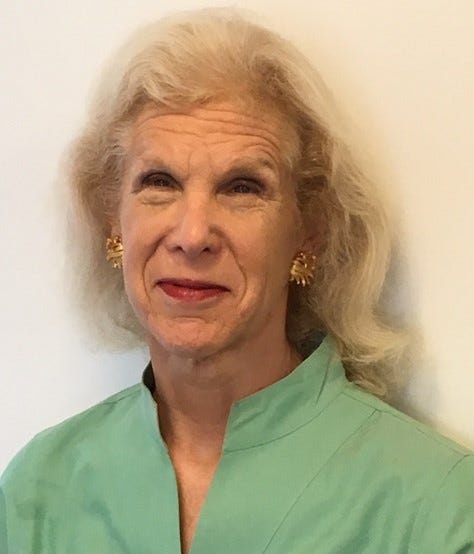
Last month, we lost Karen Petrou. I wanted to reshare a conversation I had with her five years ago, a podcast we recorded in March 2021.
I first contacted Karen after reading her excellent reports at Federal Financial Analytics. She did me the honor of reading and commenting on mine. I planned to be in Washington for an event where she was speaking, and we agreed to meet after her speech. As I sat listening in the audience, I noticed that she had a dog at her side. Only then did I realize she was blind.
I could not believe that she was able to digest and analyze the enormous amount of information required for her reports, and I never complained again about having too much to read. I learned so much from her, especially from her book on Federal Reserve policy and inequality, which we discussed during this podcast five years ago, and personally from her remarkable ability to make what she did seem effortless.
It was a great privilege to know Karen. She never let her blindness keep her from the truth. Her work, including as Board Chair of Foundation Fighting Blindness, mattered to so many.
–𝓁𝓎𝓇𝒾𝒸 💬
About this Podcast
The March 2021 Hale Report podcast is my interview with Karen Petrou, discussing her new book, Engine of Inequality: The Fed and the Future of Wealth in America. Just published, it is already the #1 book in its category on Amazon.
Ms Petrou is a well-known and influential commentator on monetary policy and banking regulation, and is managing partner at Federal Financial Analytics in Washington DC. We have often included links to her analysis in our newsletter, and I have had the great pleasure of meeting her both in Chicago and Washington.
That was not possible this time of course, so I interviewed Ms Petrou remotely. She made several key points: the Fed is responsible for the record rise in inequality between 2010 and 2016, and it continues to look for data in all the wrong places. Other potential countermeasures to inequality such as education simply take too long.
She strongly believes that the Fed should have a third mandate in addition to employment and price stability, economic equality. I've included excerpts from her remarks below, but hope that you will find time to listen to our half-hour podcast via the link below. I always hope our listeners will learn something they didn't know before, or hadn't thought about in that way. I think this interview accomplishes just that.
Excerpts
❝ I think, sadly, the data the Fed uses are often way off base, because they're averages and aggregates. And in a highly unequal country, as the United States has become, that's very misleading.
❝ Something happened in 2010 and income and wealth inequality grew far worse, far faster than ever before. And the one thing that clearly changed, starting in 2010, after the Great Financial Crisis's worst effects were behind us, was new monetary and regulatory policy. And that's what this book is about. What happened in 2010, and how could it have made us so much less economically equal and, as you said, what can we now do to change?
❝ Think about it though, economic inequality, what's it about? It's about income and wealth. That's the engine that makes us more or less equal. But what is its fuel? In economic inequality, the fuel is money. There is no agency in the United States with the power over money other than our central bank. That's what monetary policy is all about. Bank regulation, what is it about? It's about who has the money, who gets the money, how much does it cost to get the money.
Lyric Hughes Hale

Lyric Hughes Hale serves as Editor-in-Chief of Econvue, which publishes a newsletter, econVue+. She hosts The Hale Report, a podcast series on global economics. She is Director of Research at Hale Strategic


